A good tomato sauce can turn a simple meal into something warm, comforting, and satisfying. This homemade Italian tomato sauce is rich, aromatic, and surprisingly easy to prepare using everyday ingredients.
It works beautifully with spaghetti, lasagna, meatballs, baked pasta, chicken Parmesan, and even homemade pizza. Once you taste the freshness of a sauce made in your own kitchen, you may think twice before reaching for a jar.
Why You’ll Love This Tomato Sauce
There are plenty of reasons to keep this recipe close:
- Made with simple pantry ingredients
- Easy to adjust to your taste
- Freezer-friendly and convenient
- Suitable for many pasta and Italian-inspired dishes
- Rich in tomato, garlic, and herb flavor
- No complicated cooking techniques required
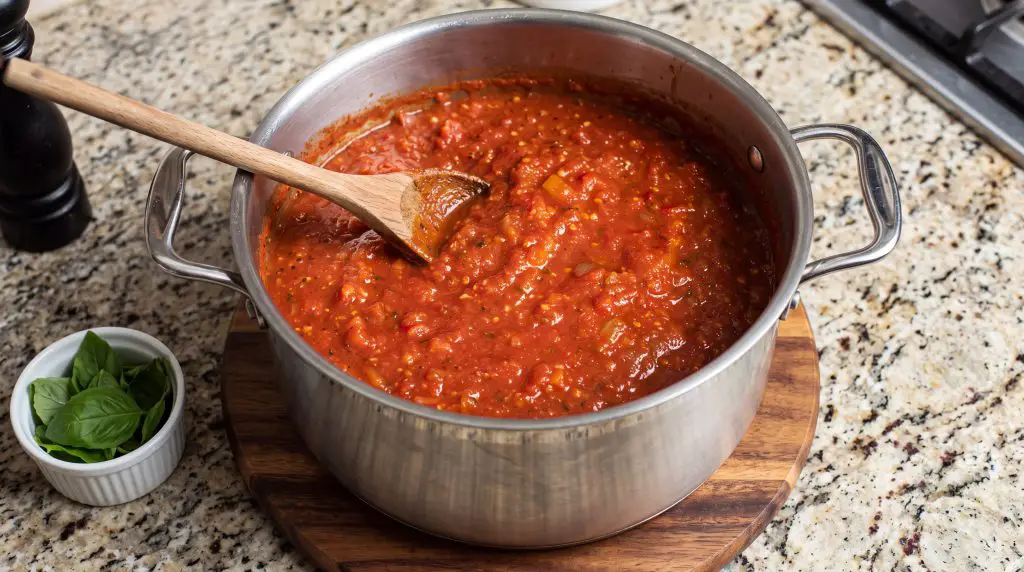
Slowly cooking the tomatoes with onion, garlic, and herbs allows the flavors to blend and develop naturally.
Ingredients
- 2 tablespoons extra-virgin olive oil
- 1 small yellow onion, finely chopped
- 3 garlic cloves, minced
- 2 cans crushed tomatoes, 28 ounces each
- 2 tablespoons tomato paste
- 1 teaspoon dried basil
- 1 teaspoon dried oregano
- ½ teaspoon salt, or more to taste
- ¼ teaspoon ground black pepper
- ¼ teaspoon red pepper flakes, optional
- 1 teaspoon sugar, optional
- ¼ cup chopped fresh basil
- ½ cup water, as needed
How to Make Homemade Italian Tomato Sauce
1. Cook the Onion
Heat the olive oil in a large saucepan over medium heat.
Add the chopped onion and cook for approximately 5 minutes, stirring occasionally. The onion should become soft and translucent without turning too brown.
2. Add the Garlic
Stir in the minced garlic and cook for about 30 seconds. Keep the garlic moving so it does not burn, as burned garlic can give the sauce a bitter flavor.
3. Cook the Tomato Paste
Add the tomato paste and stir it into the onion and garlic. Cook for 1 to 2 minutes.
This short cooking time helps deepen the tomato flavor and removes the raw taste of the paste.
4. Add the Tomatoes and Seasonings
Pour the crushed tomatoes into the saucepan. Add the dried basil, oregano, salt, black pepper, and red pepper flakes if you prefer a little heat.
Stir everything together until well combined.
5. Simmer the Sauce
Bring the sauce to a gentle simmer. Reduce the heat to low and partially cover the saucepan.
Allow the sauce to cook for 30 to 45 minutes, stirring occasionally to prevent it from sticking to the bottom. Add a small amount of water if it becomes thicker than you prefer.
6. Taste and Finish
Taste the sauce and adjust the salt, pepper, and herbs as needed.
If the tomatoes taste particularly acidic, stir in a teaspoon of sugar. This is optional, and you may not need it when using naturally sweet, good-quality tomatoes.
Add the fresh basil during the final few minutes of cooking. Remove the saucepan from the heat and let the sauce rest for 5 minutes before serving.
How to Adjust the Texture
For a slightly rustic sauce, serve it as prepared. The small pieces of onion and tomato give it a pleasant homemade texture.
For a smoother sauce, carefully blend it with an immersion blender. You can also allow it to cool slightly and blend it in a countertop blender in small batches.
Always use caution when blending hot liquids.
Helpful Cooking Tips
Choose Good Tomatoes
Because tomatoes are the main ingredient, their quality can make a noticeable difference. Select canned tomatoes with a short ingredient list and a flavor you already enjoy.
Keep the Heat Low
A gentle simmer helps the sauce develop flavor without scorching. Cooking it too quickly can cause excessive splattering and uneven reduction.
Don’t Burn the Garlic
Garlic cooks quickly. Add it only after the onion has softened, and cook it briefly before adding the remaining ingredients.
Taste Before Adding Sugar
Not every tomato sauce needs sugar. Taste the finished sauce first, then add a small amount only if the acidity feels too strong.
Let It Rest
Allowing the sauce to rest for a few minutes after cooking gives the ingredients time to settle and the flavor to become more balanced.
Ways to Use Italian Tomato Sauce
This versatile sauce can be used in many comforting meals:
- Toss it with spaghetti or penne
- Spread it over homemade pizza dough
- Layer it inside lasagna
- Spoon it over meatballs
- Use it for chicken or eggplant Parmesan
- Add it to baked ziti
- Serve it as a dipping sauce for breadsticks
- Use it as a base for soups and stews
You can also add cooked ground beef, Italian sausage, mushrooms, bell peppers, or vegetables to create a heartier meal.
Storage Instructions
Refrigerator
Allow the sauce to cool before transferring it to an airtight container. Store it in the refrigerator for up to 4 days.
Reheat it gently in a saucepan over medium-low heat, stirring occasionally.
Freezer
For longer storage, place the cooled sauce in freezer-safe containers, leaving a little room at the top for expansion. Freeze for up to 3 months.
Thaw it overnight in the refrigerator before reheating. If the sauce separates slightly, stir it well as it warms.