There’s a reason certain dishes become the unofficial star of a potluck table without anyone planning it that way. This corn and cheese pudding is one of those dishes. It’s humble, it uses ingredients most people already have on hand, and yet it consistently gets scraped clean before the main course is even finished. I’ve brought it to family dinners, church suppers, and neighborhood cookouts, and it never fails to be the first pan people go back to for seconds.
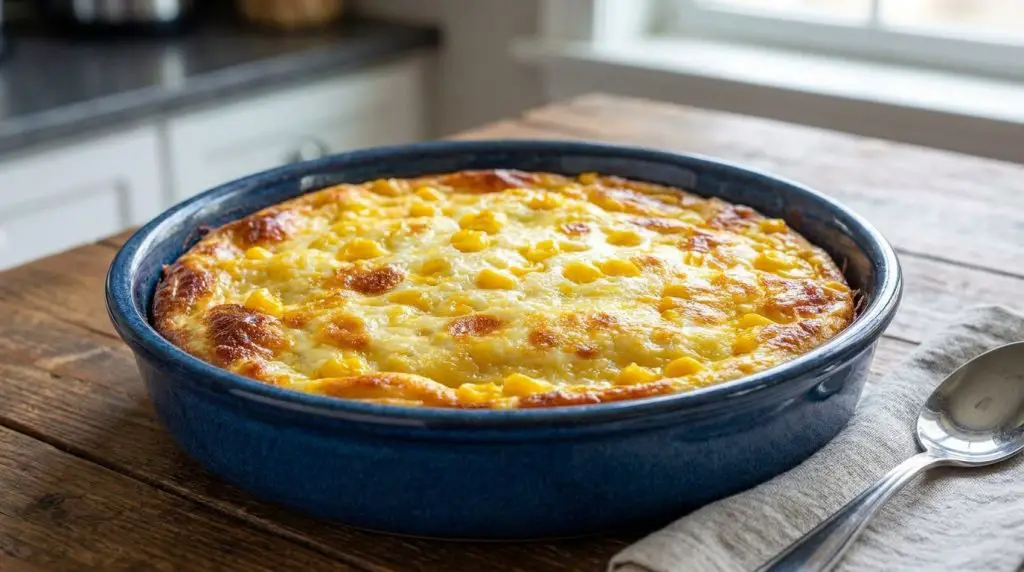
What makes it special isn’t a secret technique or a hard-to-find ingredient. It’s the texture. Somewhere between a savory custard and a comforting casserole, this pudding uses a generous ratio of eggs to dairy, which gives it a light, almost soufflé-like softness, while whole kernels of corn add little pockets of sweetness and gentle crunch throughout. It bakes up golden on top, tender in the middle, and it pairs with almost anything you’re already serving.
Why This Recipe Works So Well
Most baked corn puddings on the heavier side, dense and a little gummy from too much flour or cornstarch. This version skips fillers entirely. The eggs do all the structural work, which is why the texture ends up so much lighter than you’d expect from a dish this rich. The cheese melts into the custard as it bakes, giving the whole thing a savory backbone, while a reserved handful on top forms a lightly browned, slightly crisp crust.
It also happens to be one of the easiest make-ahead sides you can bring to a gathering. It travels well, reheats beautifully, and doesn’t require last-minute attention once it’s out of the oven.
What You’ll Need
The ingredient list is short on purpose. Four staples make up the bulk of the dish, with a pinch of salt and pepper rounding out the flavor.
Main Ingredients
| Ingredient | Amount |
|---|---|
| Corn kernels (canned, drained, or thawed from frozen) | 2 cups |
| Shredded cheese (cheddar or Colby Jack work best) | 1½ cups |
| Half-and-half or whole milk | 2 cups |
| Large eggs | 4 |
Optional Seasoning
| Seasoning | Amount |
|---|---|
| Salt | ½ teaspoon |
| Black pepper | ¼ teaspoon |
A few notes on ingredient choices: fresh corn cut off the cob works beautifully here if it’s in season, though canned or frozen corn will give you nearly identical results and save time. As for the cheese, cheddar brings a sharper flavor, while Colby Jack melts a little smoother and milder. Either one, or a mix of both, works well.
How to Make It
Step 1: Prep Your Baking Dish
Preheat the oven to 350°F. Lightly grease a 9-inch ceramic baking dish or a 2-quart casserole dish with butter or nonstick spray. Greasing the dish thoroughly now will make serving — and cleanup — much easier later.
Step 2: Build the Custard Base
In a medium mixing bowl, whisk the eggs until they turn slightly frothy and pale. Slowly pour in the half-and-half while continuing to whisk, until the mixture looks smooth and uniformly colored. If you’re using salt and pepper, stir them in at this stage so the seasoning distributes evenly.
Step 3: Fold in the Corn and Cheese
Add the corn and 1 cup of the shredded cheese into the egg mixture, folding gently rather than stirring vigorously. Set the remaining ½ cup of cheese aside for the topping. Take a moment to make sure the corn is evenly distributed through the batter rather than clumped at the bottom — this keeps every serving consistent.
Step 4: Top and Bake
Pour the mixture into your prepared dish and spread it into an even layer. Scatter the reserved cheese over the top; this will melt and lightly brown into a golden crust as it bakes. Place the dish on the middle oven rack and bake for 40 to 50 minutes.
Step 5: Check for Doneness
This pudding is finished baking when the edges look set and slightly golden, but the center still has a gentle wobble when you nudge the pan. A knife or toothpick inserted near the center should come out mostly clean, with just a bit of moist custard clinging to it — that’s exactly what you want.
Step 6: Let It Rest Before Serving
Once out of the oven, resist the urge to dig in right away. Let the pudding rest for 10 to 15 minutes. During this time, residual heat continues to gently finish setting the custard, which keeps the final texture creamy rather than runny. This short rest makes a noticeable difference in how cleanly the pudding slices and serves.
Serving Suggestions
This dish is versatile enough to sit next to almost any main course. It’s a natural companion to roasted or fried chicken, glazed ham, grilled sausages, or a simple weeknight meatloaf. Around the holidays, it holds its own next to turkey and stuffing as a lighter alternative to traditional creamed corn. For a casual summer cookout, serve it warm alongside barbecue ribs or pulled pork.
A sprinkle of chopped chives, sliced green onion, or a light dusting of smoked paprika over the top just before serving adds a nice pop of color and a subtle extra layer of flavor, if you want to dress it up for company.
Storage and Reheating Tips
Leftovers keep well in an airtight container in the refrigerator for up to four days. To reheat, cover the dish loosely with foil and warm it in a 300°F oven until heated through, which helps preserve the custard-like texture better than a microwave. If you’re short on time, the microwave works fine too — just reheat in short bursts to avoid overcooking the edges.
This dish can also be assembled a day ahead and refrigerated unbaked. Simply bring it to room temperature for about 20 minutes before placing it in the oven, and add a few extra minutes to the bake time if it’s still cold in the center.
A Few Helpful Variations
- Spicy version: Stir in a small diced jalapeño or a few dashes of hot sauce for a subtle kick.
- Herb-forward version: Add a tablespoon of fresh chopped thyme or dill to the custard for an herby twist.
- Extra-cheesy version: Swap half the cheddar for pepper jack or a smoked gouda for a deeper, richer flavor.
- Bacon addition: Fold in a few tablespoons of crumbled cooked bacon along with the corn for a smoky, savory upgrade.
Frequently Asked Questions
Can I use frozen corn without thawing it first? It’s best to thaw and drain frozen corn before adding it to the batter. Using it straight from frozen can add excess moisture and water down the custard, affecting how well it sets.
Why is my pudding runny in the middle? This usually means it needs a few more minutes in the oven, or it wasn’t given enough time to rest after baking. The center should still have a slight wobble when it comes out, but it will continue to firm up as it cools.
Can I make this dairy-free? You can substitute the half-and-half with a full-fat, unsweetened plant-based milk and use a dairy-free shredded cheese alternative. The texture will be slightly different, but the dish will still hold together well.
Is this the same as cornbread pudding? Not quite. This recipe skips flour, cornmeal, and sugar entirely, relying on eggs for structure. That’s what gives it a softer, more custard-like texture compared to a traditional cornbread-style pudding, which tends to be denser and slightly sweet.
This is the kind of recipe worth keeping on hand for exactly the reason its name suggests — it earns its spot on the table every single time, and it rarely lasts long enough to need reheating.