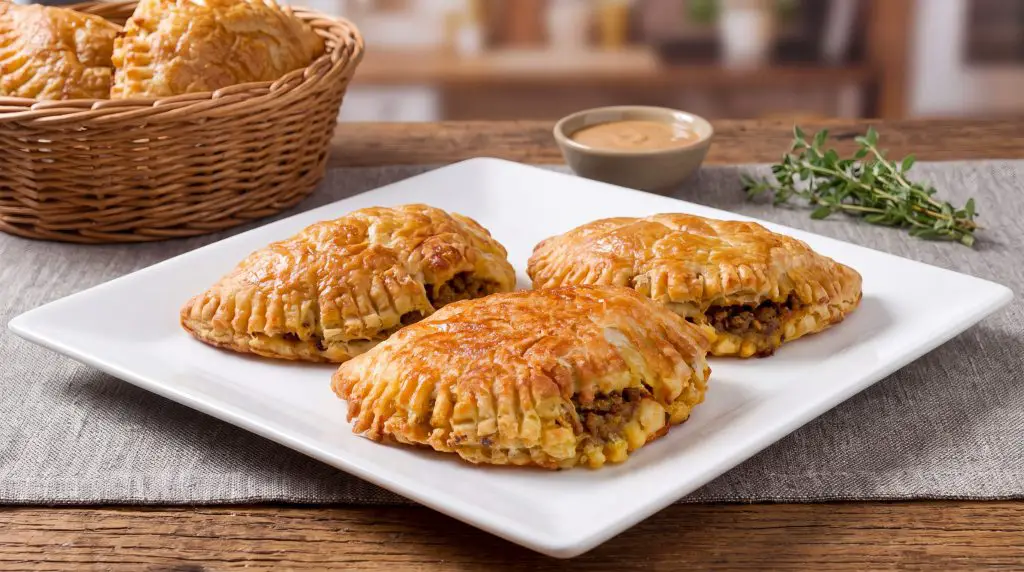
There is something wonderfully comforting about cutting into a golden pastry and discovering a warm, savory filling inside. Michigan pasties deliver exactly that experience, combining seasoned meat, tender vegetables, and flaky homemade dough in one satisfying meal.
These traditional hand pies are especially popular in Michigan’s Upper Peninsula. They are practical, filling, and easy to carry, which helps explain why generations of families continue to enjoy them.
Ingredients
For the pastry
- 4 1/2 cups all-purpose flour
- 1 teaspoon salt
- 1 cup vegetable shortening
- 1 1/4 cups ice-cold water
For the filling
- 1 1/2 pounds lean ground beef
- 1/2 pound ground pork
- 5 cups potatoes, peeled and thinly sliced or finely diced
- 1 medium onion, finely chopped
- 2 carrots, shredded
- 1/2 cup rutabaga, finely diced
- 1 tablespoon salt
- 1 teaspoon ground black pepper
- 1 beef bouillon cube
- 1/2 cup hot water
How to Make Michigan Pasties
1. Prepare the dough
Place the flour and salt in a large mixing bowl. Add the shortening and work it into the flour using a pastry cutter or your fingertips. Continue until the mixture resembles coarse crumbs.
Gradually pour in the ice water, stirring gently until the dough comes together. Avoid mixing longer than necessary, as overworking the dough may make the pastry tough.
Shape the dough into a ball, cover it, and refrigerate it while you prepare the filling.
2. Prepare the vegetables
Peel and cut the potatoes and rutabaga into small, evenly sized pieces. Finely chop the onion and shred the carrots.
Smaller pieces cook more evenly inside the pastry, so take a little extra time with this step.
3. Mix the filling
Place the beef, pork, potatoes, onion, carrots, and rutabaga in a large bowl. Season with salt and black pepper.
Dissolve the beef bouillon cube in the hot water. Allow it to cool slightly before adding it to the filling. Mix gently until the ingredients are evenly distributed.
4. Shape the pasties
Preheat the oven to 350°F. Line one or two large baking sheets with parchment paper.
Divide the chilled dough into eight equal portions. On a lightly floured surface, roll each portion into a circle approximately 8 to 9 inches wide.
Place a generous amount of filling on one side of each circle, leaving space around the edge.
5. Fold and seal
Fold the empty half of the dough over the filling to create a semicircle. Press the edges together firmly, then crimp them with a fork or fold them into a decorative ridge.
Cut a small slit in the top of each pasty to allow steam to escape.
6. Bake until golden
Arrange the pasties on the prepared baking sheets. Bake for approximately 55 to 65 minutes, or until the crust is golden and the vegetables are tender.
Because the filling contains raw ground meat, check that the center reaches a safe internal temperature of 160°F before serving.
Allow the pasties to rest for about 10 minutes. The filling will be very hot immediately after baking.
Helpful Recipe Tips
- Keep the pastry ingredients cold for a tender, flaky crust.
- Cut the vegetables into small, similar pieces so they cook evenly.
- Do not overfill the dough, or the seams may open during baking.
- If the crust browns too quickly, loosely cover the pasties with foil.
- Brush the tops with beaten egg before baking for a deeper golden finish.
- Place the baking sheet on the middle oven rack for more even cooking.
Serving Suggestions
Michigan pasties are hearty enough to serve as a complete meal. Traditionally, people enjoy them with ketchup or gravy, but they also pair nicely with:
- Brown gravy
- Dijon or yellow mustard
- Pickled vegetables
- Coleslaw
- A crisp green salad
- Warm vegetable soup
Storage and Reheating
Allow leftover pasties to cool completely before placing them in an airtight container. Refrigerate them for up to three days.
Reheat them in a 350°F oven for approximately 15 to 20 minutes. The oven helps restore the texture of the pastry better than a microwave.
For longer storage, wrap each cooled pasty individually and freeze it for up to three months. Thaw overnight in the refrigerator before reheating.